 Maya Shasky
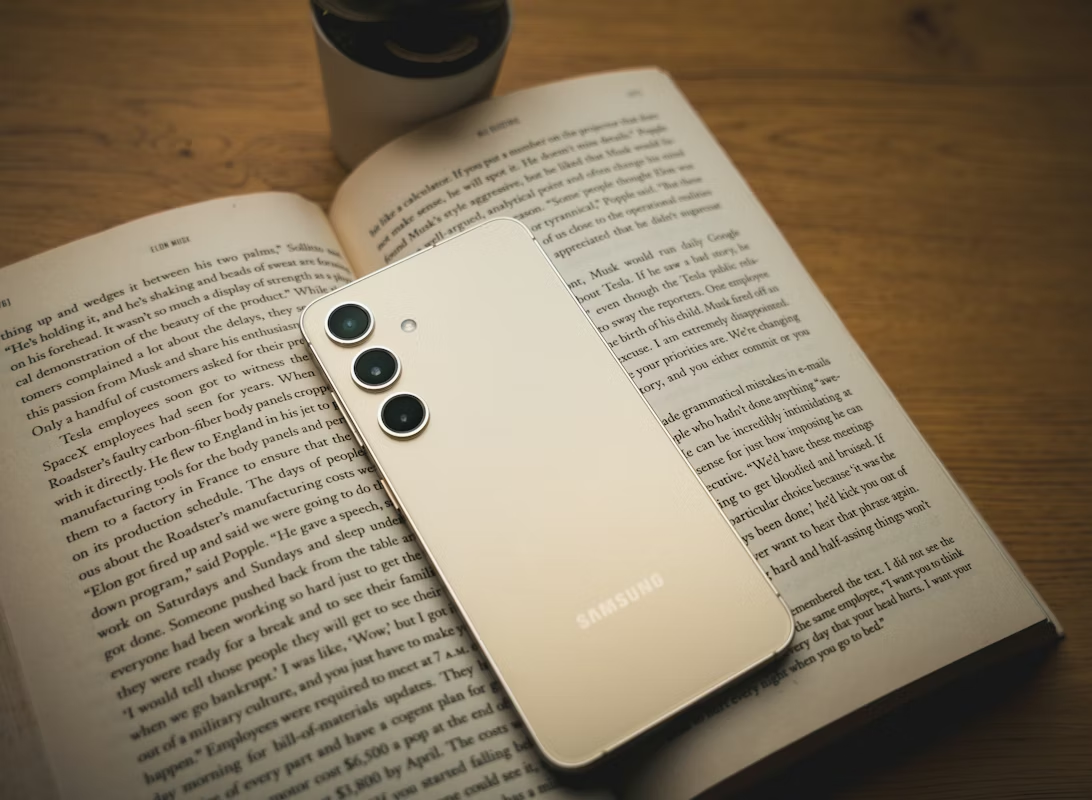
Today, many teenagers are spending less time reading and more time scrolling through social media, often losing awareness of the world around them. This shift has fueled a continuous public debate, with popular topics including whether social media serves as a useful educational tool or if it requires tighter restrictions to mitigate its effect on teenagers' lives. While some view social media as an easy way to connect with the community or receive news, others point to its potential to negatively affect mental health, contributing to issues like anxiety and depression. Despite varied opinions, the evidence suggests that increased time spent reading offers concrete benefits for a teen's cognitive function and mental well-being.
Extended use of a phone without breaks can decrease their cognitive skills, such as the ability to find the right words to say in a conversation. In contrast, reading helps teens enrich their vocabulary, leading to more articulate and varied responses. Encountering unfamiliar words in a book naturally encourages curiosity to discover their meaning, eventually incorporating them into your everyday life. The impact reading has on expanding vocabulary is extensive. According to an article called Reading Improves Teenagers' Vocab, Whatever Their Background, “Analysing the scores of nearly 11,000 14-year-olds in a word exercise, the researchers found that teenagers who read for pleasure every day understood 26 percent more words than those who never read at all in their spare time. And teenagers from book-loving homes knew 42 percent more words than their peers who had grown up with few book.” This increased vocabulary is vital for improving conversational skills, reading comprehension, and academic performance.
Reading can also get your brain to think productively and have a longer attention span. On the other hand, social media, characterized by short-form content and endless scrolling, can fragment attention and is often linked to "doomscrolling,” where users are compulsively spending time on social media. The release of dopamine reinforces the behavior, creating a pleasure-seeking cycle that contributes to addiction and a shortened attention span.
According to an article called Speaking of Psychology: Why our attention spans are shrinking, research suggests that our time online has had a significant impact on our ability to stay focused. In 2004, the average attention span on a screen was two and a half minutes. By 2012, this dropped to 75 seconds, and in more recent years, the average has fallen to approximately 47 seconds. This trend suggests that addiction to quick-hit internet content is steadily eroding the ability of teens to remain focused on a single task. In contrast, reading a book can help teens develop an extended attention span because they are staying focused on a singular narrative for a long period of time.
In addition to helping teens become more productive in their daily lives, reading can also help teens with their mental health by reducing their stress levels. Whereas going on social media can be a constant reminder of your life, reading allows teens to get immersed in an imaginary world. The benefits are measurable: a University of Sussex study found that individuals who read for only six minutes exhibited physiological signs of relaxation, including slower heart rates, reduced muscle tension, and overall lower stress levels.
In conclusion, reading can help you be more productive than going on your phone because it will help you find new vocabulary that you can use in your daily life, it can help with your attention span, and it can help reduce your stress. This is very important because reading not only can help you with your academics, but, as this article has proven, it can help with your life, and it can help you become a better person. So, the next time you seek a moment of rest, consider picking up a book instead of your phone—your mind will thank you for it.
Sources:
header image used under the Unsplash License
https://readingpartners.org/blog/four-compelling-reasons-shut-off-screen-open-good-book/
https://irisreading.com/can-reading-help-your-vocabulary/
https://www.apa.org/news/podcasts/speaking-of-psychology/attention-span
https://cls.ucl.ac.uk/reading-improves-teenagers-vocab-whatever-their-background-say-researchers/

 Opinion: What Happened to AI?