 Julia Somlo
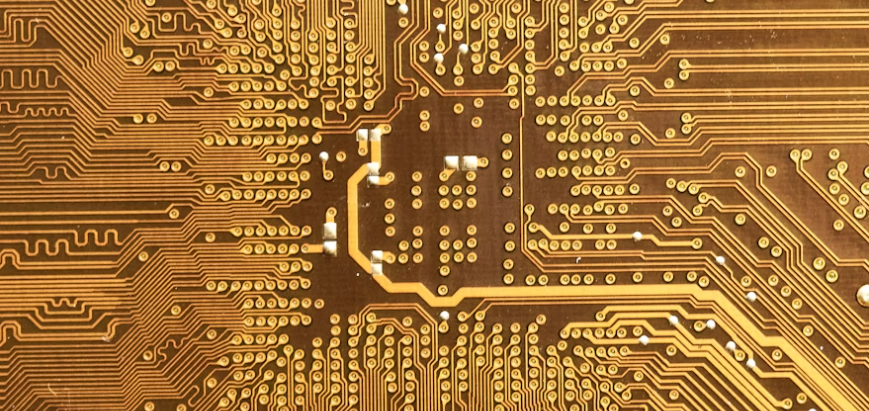
In 2024, Google made a breakthrough in quantum computing: their new chip, Willow, scored extremely fast results on computing tests. According to the announcement, titled Meet Willow; Our State of the Art Quantum Chip, Willow can perform calculations that would take normal computers septillions of years to complete.
What is a Quantum Computer?
A quantum computer is a type of computer that is structured completely differently from a normal computer. Also called classical computers, normal computers operate on 0 and 1 values that flip a series of switches to perform calculations, run computer programs, and more. However, quantum computers are much faster because they use qubits, which, in a nutshell, can represent the 0 and 1 values of classical computers at the same time. This is called quantum superposition, which is based on a branch of quantum mechanics where particles may be in multiple states at once, or, in this case, where qubits can be in multiple states at once.
What Makes Quantum Computing Special?
There are various benefits of quantum computing, due to variations in computer speed. P vs NP was a problem that was introduced in 1971 by Stephen Cook and Leonid Levin originally as an applied mathematical problem. P stands for problems that can be solved easily, or in deterministic polynomial time. On the opposite end, NP stands for problems that are almost impossible to solve, such as curing diseases. This connects to computation because many people rely on computer programs to perform advanced calculations, and due to this, P vs NP was widely popularized in the world of computer science. Over the years, the majority of computer scientists have concluded that some problems in NP will be much more difficult to compute on computers, which can be checked to see if they are correct, but not necessarily solved. Some examples of NP problems are the travelling salesman problem, which asks to compute the minimum distance that a travelling salesman would walk if asked to walk to every city in the United States, along with the exact sequence of cities he should walk to. Since quantum computing is theoretically much stronger than original classical computers, P will become much more prominent than NP as the number of unsolvable problems decreases in the future.
According to an article titled Your Quick Guide to Quantum AI: The Future of Computing or Just Hype?, “Quantum Computers can do anything from discovering new drugs to finding new routes on the road” (Stuart). Moreover, IBM’s article Which problems are quantum computers good for? explains other use cases, such as simulating environmental events or even virtual quantum phenomena with the abundance of computing power.
Companies such as IBM, which have been pioneers in computing since the 1970s, have announced plans for the construction of quantum data centers, after quantum supercomputers were already built. Currently, IBM has Quantum System Two computers, which are open source. In 2029, IBM will release its Quantum Starling computers, which, according to the company, will have 200 qubits, and have already released plans for another quantum computer that will be released in the years following 2033 (IBM).
Due to faster computation speed that would allow for more complex programs to be run and enable us to solve many otherwise insolvable problems, quantum computing may soon become a new, powerful technology just like AI.
Sources:
header image used under the Unsplash License
https://blog.google/technology/research/google-willow-quantum-chip/
https://meetiqm.com/blog/quantum-ai-the-future-of-computing-or-just-hype/
https://www.ibm.com/think/topics/quantum-computing
https://www.ibm.com/quantum/hardware#system-and-data-centers

 What is the Impact of Historical Foreign Intervention in Africa?